

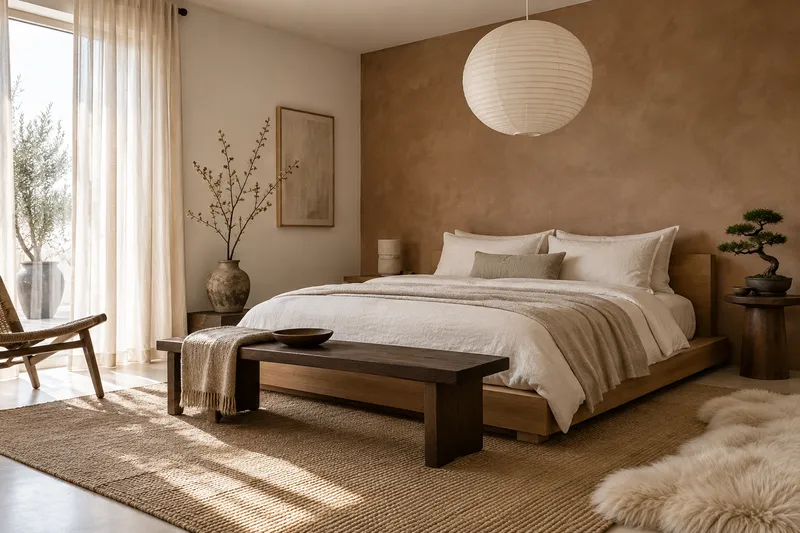
Japandi and Scandinavian style are close relatives, and people mix them up all the time. Both are calm, practical and built on natural materials. The difference is mood: Scandinavian style is bright, airy and cosy, while Japandi is lower, quieter and more earthy, because it adds Japanese simplicity and wabi-sabi to the Scandinavian base.
I get asked about this a lot, usually by someone standing in a white Dubai apartment with oak floors, wondering which way to go. So here is a clear side-by-side, with the details that really separate the two and how to choose. If you want the full story of each, read my guides to Scandinavian style and Japandi style.
Where each style comes from
Scandinavian design grew in Denmark, Finland, Norway and Sweden in the early twentieth century and flourished in the 1950s. Its ideals were simplicity, function and good design for everyone. The 1954 exhibition "Design in Scandinavia" at the Brooklyn Museum helped make it famous in America, and the idea of hygge, the Danish feeling of cosiness, still shapes how people use it today.
Japandi is much younger as a name: the word, from "Japan" and "Scandi", appeared around 2016. But the meeting of the two cultures is older, seen for years in ceramics, architecture and Danish furniture. Japandi takes the Scandinavian love of wood and comfort and adds the Japanese ideas of restraint, low living and wabi-sabi, the beauty of things that are simple, natural and a little imperfect.
The five key differences
1. Colour
Scandinavian rooms are light: soft white walls, pale grey, a touch of blue or blush. Japandi goes warmer and deeper: beige, sand, clay, mushroom, charcoal and muted sage. If your room feels cold, Japandi colours will warm it. If it feels dark, Scandinavian colours will lift it.
2. Wood
Scandinavian style loves pale woods such as birch, ash and light oak. Japandi uses those too but adds contrast with darker woods like walnut, smoked oak or black-stained pieces. One dark wood element is often the quickest way to turn a Scandi room toward Japandi.
3. Furniture height and shape
Scandinavian furniture is light and leggy, often with soft curves. Japandi sits lower: platform beds, low sofas, floor cushions and benches, with straighter, calmer lines. Lower furniture makes a ceiling feel higher and a room feel more grounded.
4. Textiles and cosiness
Scandinavian rooms are layered with knitted throws, sheepskins and plenty of cushions, because cosiness is the goal. Japandi keeps textiles fewer and flatter: linen, cotton, wool in plain weaves. It is still comfortable, just with less fluff and more breathing space.
5. Decoration
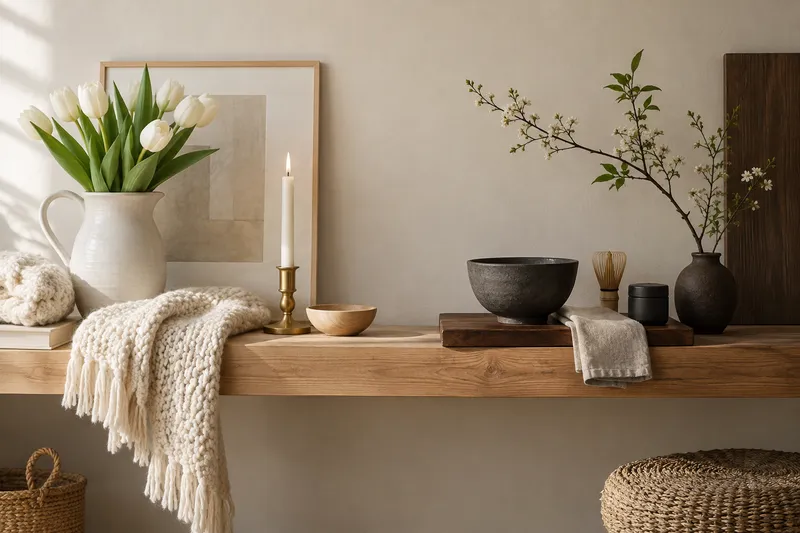
Scandinavian style allows a little play: graphic prints, a gallery wall, candles everywhere, a bunch of tulips. Japandi edits harder. Think one handmade ceramic, one branch in a vase, one piece of art, and plenty of empty surface. In Japandi, the empty space is part of the design.
What they share
- Natural materials: wood, linen, wool, stone, paper and clay
- Function first, with no decoration for its own sake
- Clutter-free rooms and good storage
- Soft, natural light and warm lamps in the evening
- Respect for craft and things made to last
This is why they combine so well. Most Japandi rooms are really a Scandinavian base with Japanese editing on top.
If you cannot decide, start Scandinavian and then take three things away. What is left, with one dark wood piece and a handmade bowl, is usually Japandi.
How to choose for your home
- Choose Scandinavian if your room has little daylight, you love cosy layers, or you live with young children and want a light, forgiving look.
- Choose Japandi if your room is very bright, you like a calm, grown-up feeling, or you want a bedroom that feels like a retreat.
- In Dubai, strong sun and white tiles can make pure Scandinavian look stark. Warmer Japandi colours, linen curtains and a jute rug soften the light beautifully.
- In a small rental, both work. Keep the walls as they are, and change the mood with textiles, one wooden piece and lighting.
- Look at what you already own. Lots of pale wood points to Scandinavian; darker wood and ceramics point to Japandi.
Room by room: the same space in both styles
Living room
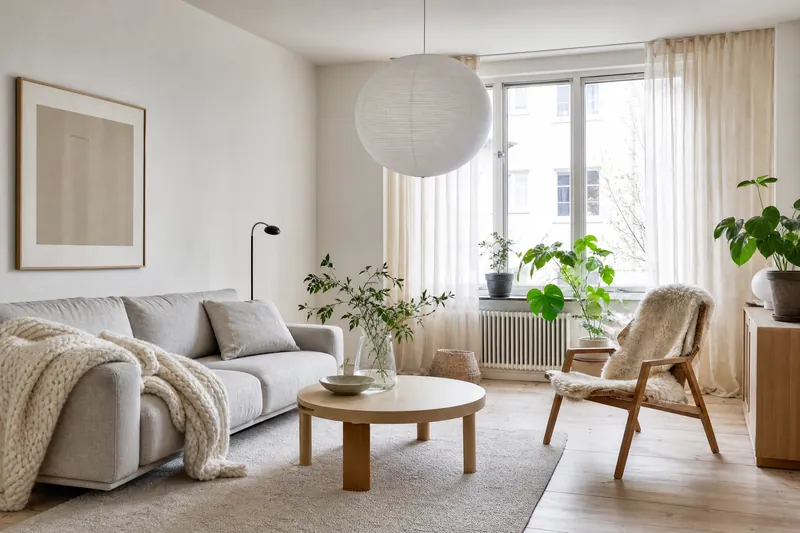
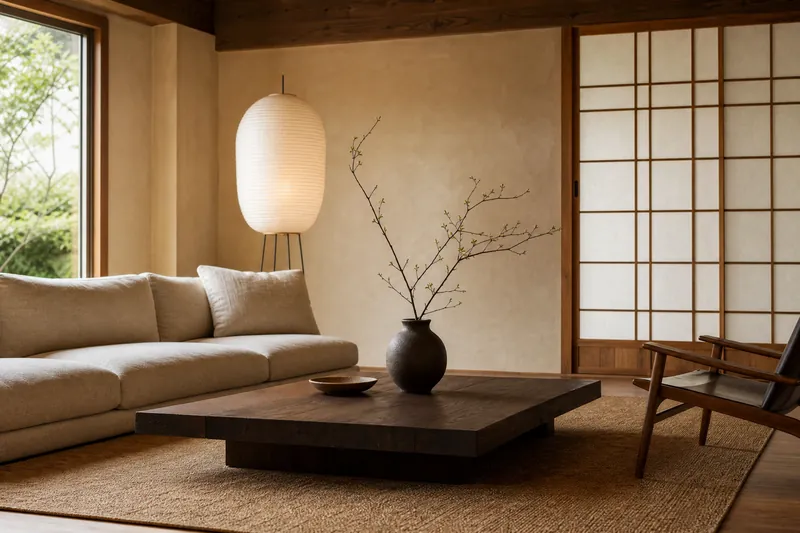
Scandinavian: a light grey sofa on slim legs, a round birch coffee table, a knitted throw, a paper or glass pendant and a few plants. Japandi: a lower sofa in oatmeal linen, a solid walnut or dark oak coffee table, one large ceramic, a floor lamp with a paper shade and a single sculptural branch.
Bedroom
Scandinavian: a white bed frame or light oak headboard, layered white and grey bedding, a sheepskin and bedside lamps with cosy shades. Japandi: a low platform bed, linen in sand or clay tones, a bench at the foot of the bed and almost nothing on the bedside tables. The photo at the top of this article sits between the two: Scandinavian light, Japandi height and colour.
Dining area
Scandinavian: a pale wood table with spindle-back chairs and a pendant hung low. Japandi: a heavier table with darker wood or rush-seat chairs, a linen runner and handmade stoneware on display.
Mistakes to avoid
- Making Scandinavian too white, so the room feels like a clinic. Add wood, texture and warm bulbs.
- Making Japandi too empty or too dark, so it feels cold. Keep enough warmth and softness to live with.
- Mixing too many wood tones. Pick one light and one dark, and repeat them.
- Buying "Japanese" decorations to signal the style. A good bench and a handmade vase say more than themed objects.
The short answer
Scandinavian is light, cosy and cheerful; Japandi is low, warm and serene. Both come from the same love of simple, honest homes, so you cannot really go wrong. Both styles are part of the fifty I write about in my book Soul of the Room, and if you are still unsure, try the three-things rule above and see how your room feels.
Comments
No comments yet. Be the first to share your thoughts or ask Farnaz a question.