

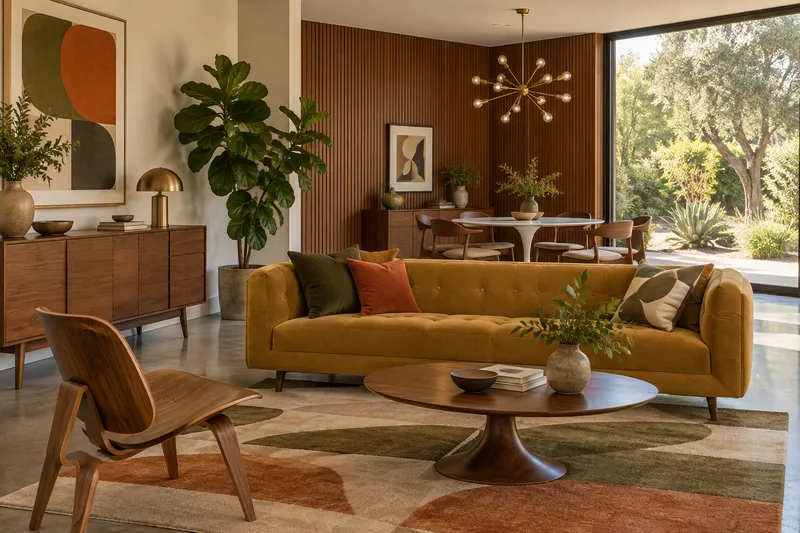
Mid-century modern is the furniture and interior style of roughly 1945 to the early 1970s: clean lines, warm wood, tapered legs, low and open rooms, and furniture shaped around the human body. It mixes the honesty of modernism with the warmth of natural materials, so it feels both fresh and friendly. Many of the chairs you know by sight, from the Eames Lounge Chair to the Tulip chair, come from this period.
I love this style because it is so easy to live with. A good mid-century room looks smart without trying, and nothing in it is there just for show. Here is where it comes from, what defines it, and how I would bring it into a modern apartment without turning it into a film set.
Where mid-century modern comes from
After the Second World War, architects and designers wanted homes that were lighter, simpler and more affordable. New materials and techniques, such as moulded plywood, fibreglass and post-and-beam building, made new shapes possible. The ideas came from the Bauhaus and the International Style in Europe, and from Scandinavian designers who cared about natural materials and comfort.
In the United States, Charles and Ray Eames, Eero Saarinen and the architect Richard Neutra became the famous names, together with builders like Joseph Eichler in California. In Denmark and Finland, Hans Wegner, Finn Juhl, Arne Jacobsen and Alvar Aalto shaped the softer, wooden side of the look. The name itself came later: writer Cara Greenberg used it for her 1984 book on 1950s furniture, and it stuck.
The five elements that define mid-century modern
1. Clean lines and organic curves
Furniture is simple, with no carving or decoration, but it is rarely boxy. Look for soft curves on chair backs, kidney-shaped and oval tables, and arms that follow the body. The shape does the decorating.
2. Tapered legs and furniture that floats
Sofas, sideboards and beds stand on slim, angled legs, so you can see the floor underneath. This makes a room feel lighter and bigger. Eero Saarinen went further with his pedestal tables and Tulip chair, because he wanted to clear away what he called the "slum of legs" under a table.
3. Warm wood, especially walnut and teak
Walnut and teak are the heart of the style: sideboards with sliding doors, slatted wall panels, moulded plywood chairs. The grain is shown, not painted over. Pair the wood with leather, wool and brass and the room instantly feels warm.
4. Iconic chairs and lighting
One strong piece sets the tone. The Eames Lounge Chair (1956), the Egg chair Arne Jacobsen drew for the SAS Royal Hotel in Copenhagen (1959) and sputnik or globe pendant lights are the classics. You do not need originals: a well-made chair with the same honest shape does the job.
5. Open plans and a link to nature
Mid-century houses had big windows, low profiles and open living and dining areas. Plants were part of the design, and the garden was meant to feel like another room. Indoors, that means fewer walls, clear sightlines and greenery near the windows.
The mid-century colour palette
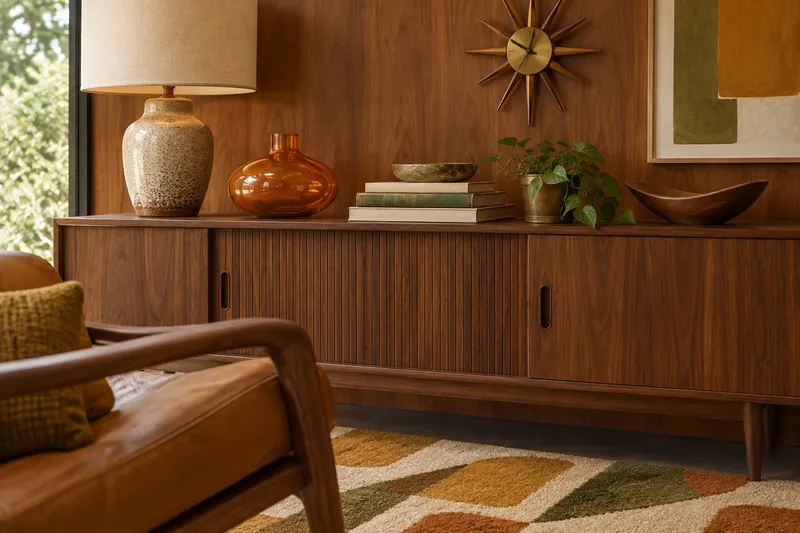
Start with warm neutrals: cream, soft white and the brown of the wood. Then add two or three accents from the classic palette: mustard, burnt orange, olive green, teal or a deep blue. Use the strong colours on cushions, a single armchair, art and ceramics, not on every wall. Graphic patterns, like simple geometric rugs and abstract prints, belong here too.
My rule for mid-century colour: one big warm wood piece, one bold colour you love, and everything else calm. Three bold colours in one room starts to look like a costume.
Materials and textures
- Walnut, teak and oak with a visible grain, in oiled or satin finishes
- Moulded plywood and curved veneer for chairs and side tables
- Leather in cognac or tan, and wool upholstery in solid colours
- Brass and painted metal for lamps, clocks and small details
- Glass and ceramics in amber, orange or green tones
- Terrazzo, cork or warm stone underfoot instead of cold grey tiles
How to use mid-century modern in a modern home
- Choose one hero piece first: a walnut sideboard, a lounge chair or a sofa on tapered legs.
- Keep the floor visible. Pick furniture with legs and a rug sized so the front legs of the sofa sit on it.
- Add a slatted wood panel or a wood-framed mirror behind the sofa or bed for instant warmth.
- Light the room in layers: a sputnik or globe pendant, a ceramic table lamp and one floor lamp.
- Bring in plants with big leaves, like a fiddle-leaf fig or monstera, near the window.
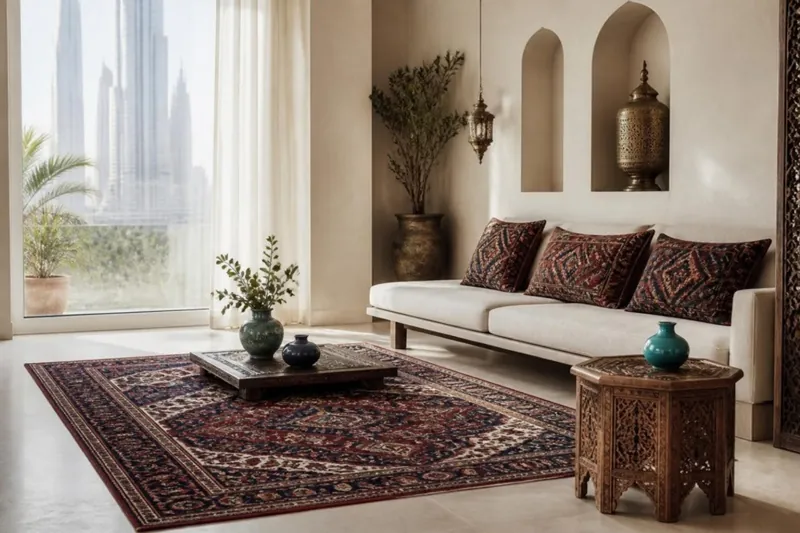
- In a Dubai apartment with white walls and tiled floors, a large wool rug and plenty of wood stop the room from feeling cold.
Mixing is fine. Mid-century furniture sits beautifully with Scandinavian style because they share the same roots, and a few handmade pieces from Japandi keep it from looking too retro.
Mistakes to avoid
- Buying a full matching set. The style looks best when pieces feel collected.
- Too much orange and brown together, which can look dated rather than mid-century.
- Bulky, overstuffed sofas that hide their legs and break the light look.
- Cheap reproductions with wobbly legs. A simple, solid piece is better than a poor copy of an icon.
- Forgetting comfort. These designers built furniture for real people, so every chair should be good to sit in.
Mid-century modern vs Scandinavian style
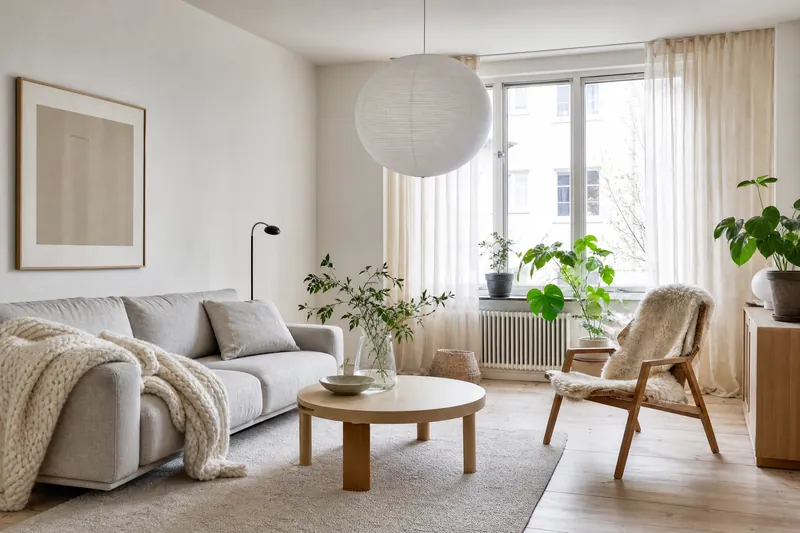
They are close cousins. Scandinavian style is lighter: pale oak and birch, white walls, soft textiles and a quieter palette. Mid-century modern uses darker woods like walnut and teak, stronger accent colours and more graphic shapes. If you want calm and bright, lean Scandinavian. If you want warmth and a little drama, lean mid-century.
A style that keeps coming back
Mid-century modern has lasted more than seventy years because it was designed for everyday life: comfortable, honest and beautiful without fuss. Start with one good piece and build slowly. It is one of the fifty styles I explore in my book Soul of the Room, and it is a wonderful choice if you want a home that feels warm, smart and timeless.
Comments
No comments yet. Be the first to share your thoughts or ask Farnaz a question.