

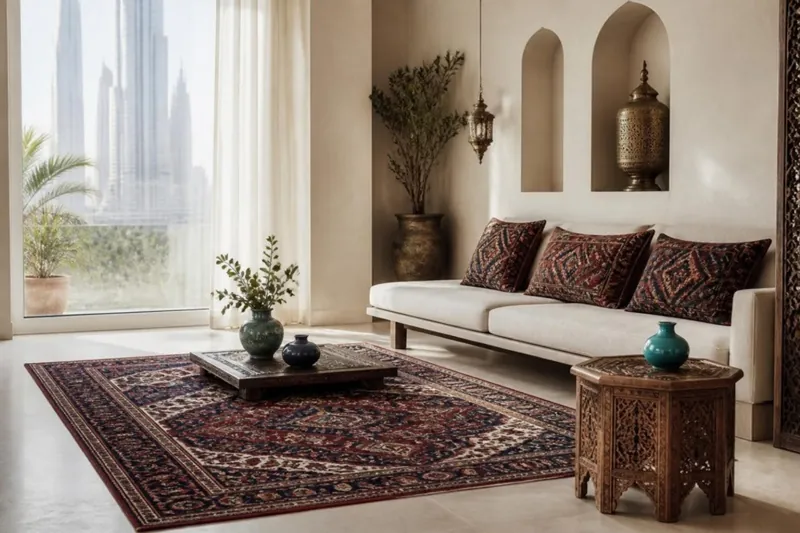
Some interior styles are about looking modern. Persian style is about feeling welcome. It grew out of centuries of Iranian architecture, craft and family life, and its whole purpose is to make a guest sit down, take a glass of tea and stay a little longer. That is exactly why it still works so well in homes today, especially in a city like Dubai, where so many of us live between cultures.
In this guide I will walk you through what defines Persian interior style, the elements that matter most, and how to bring it into a modern apartment or villa without your living room turning into a museum.
Where Persian style comes from
Persian design draws on a very old idea of the home as a garden: a protected, beautiful inner world. Traditional houses turned inward around a courtyard with water and trees, while the street side stayed plain. Inside, rooms were layered with carpets, cushions and textiles rather than heavy furniture, and walls carried niches, mirror work and painted plaster. Pattern was never random. It came from geometry, from flowers and from the Persian garden itself, the paradise that gave the English language that very word.
The five elements that define it
1. The Persian rug
Everything starts on the floor. A hand-knotted rug is the heart of a Persian room, and in a modern home it can be the single piece that sets the whole style. Look at its colours before you choose anything else: the paint, cushions and accessories should all be taken from the rug, not the other way round. Size matters too. In a living room, aim for a rug large enough that at least the front legs of the sofa and armchairs rest on it, so the seating feels gathered together.
2. Jewel colours on a warm base
The classic Persian palette is deep madder red, indigo, saffron, turquoise and forest green. In a modern interior, I like to keep walls and large furniture warm and quiet: ivory, sand, soft clay. Then the rug and two or three accessories carry the jewel tones. This keeps the room calm and lets the colours glow instead of competing.
3. Arches and niches
Arches are one of the most recognisable shapes of Persian architecture. You do not need to rebuild your walls to use them. An arched mirror, an arched headboard, a plaster niche or even an arch painted in a slightly darker shade behind a console table brings the same softness to a straight-lined apartment.
4. Tiles, pattern and craft
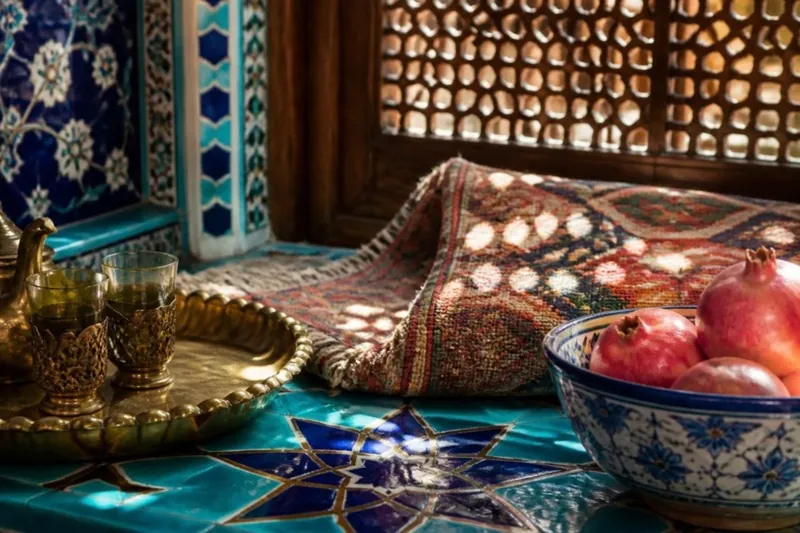
Turquoise and cobalt tiles, carved wooden lattice screens, hand-painted ceramics, brass trays and engraved metal lamps are the details that make the style feel authentic. Choose a few good handmade pieces rather than many decorative ones. One tiled side table or a carved screen that throws patterned shadows in the afternoon light says more than a shelf full of objects.
5. Textiles and low seating
Kilims, termeh (the traditional Persian woven silk-like fabric), embroidered cushions and floor cushions add the layered comfort that makes Persian rooms so inviting. A low sofa or a floor seating corner with a few large cushions is a lovely, relaxed way to bring this into a family living room or a reading nook.
How to use Persian style in a modern home
The secret is balance. Persian style is generous, so a modern room needs some breathing space around it. Here is the approach I use with clients:
- Start with one hero piece: usually a rug, sometimes an antique console or an arched mirror.
- Keep the base light and warm: walls in ivory, sand or a soft clay tone, and a simple sofa in linen or bouclé.
- Take two accent colours from the hero piece and repeat each of them three times around the room.
- Mix old and new: a vintage rug with a clean modern sofa, or a brass lantern next to a minimal floor lamp.
- Add one handmade texture per area: a ceramic bowl, a kilim cushion, a carved wooden tray.
- Finish with hospitality: a tea tray on the coffee table, fresh flowers or a bowl of pomegranates.
Common mistakes to avoid
The most common mistake is using too many patterns at the same scale. If the rug is busy, keep cushions and curtains plainer, or choose patterns at a clearly different size. The second mistake is too much dark wood and heavy furniture, which can make a small apartment feel closed. Lift the room with light walls, brass and glass, and plenty of natural light. And finally, avoid buying "Persian-looking" decor in bulk. A few real handmade pieces always look richer than many printed copies.
Is Persian style right for you?
If you love warmth, colour, stories behind objects and a home that feels lived in and welcoming, Persian style may be your style. It also mixes beautifully with others: with Scandinavian simplicity, with Japandi calm or with modern Mediterranean light. Persian is one of the 50 styles in my upcoming book, Soul of the Room, where I go deeper into its history and show more ways to use it.
If you would like help bringing Persian warmth into your own home in Dubai or online, you can book a consultation with me, and every day here on the journal I write about a new interior style.
Comments
No comments yet. Be the first to share your thoughts or ask Farnaz a question.