

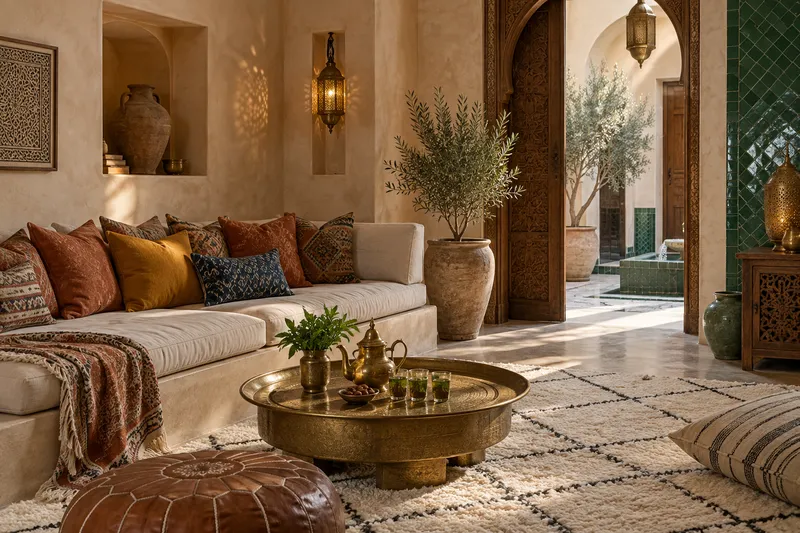
Moroccan interior style is warm, handmade and full of light. It grew from the riads, the traditional Moroccan houses built around a courtyard, and it is famous for zellige tiles, smooth tadelakt plaster, carved wood, arches, lanterns and rugs in spice colours. At its best it feels like a cool, shaded room on a hot afternoon, with tea on the table and patterned light on the walls.
Living in Dubai, I see how well this style suits our climate and our love of hosting. It is close to my Persian roots too, but with its own character. Here is where Moroccan style comes from, what defines it, and how to bring it into a modern home with taste.
Where Moroccan style comes from
Moroccan design mixes Amazigh (Berber), Arab, Andalusian and Islamic traditions. The classic home is the riad, which turns its back on the busy street and opens inward to a courtyard with a fountain or garden. Inside, craftsmen covered walls and floors with zellige mosaics, carved stucco and painted cedar wood. Cities such as Fez and Marrakesh are still famous for these crafts, and Fez remains the main centre of zellige making today.
The five elements that define it
1. Zellige tile
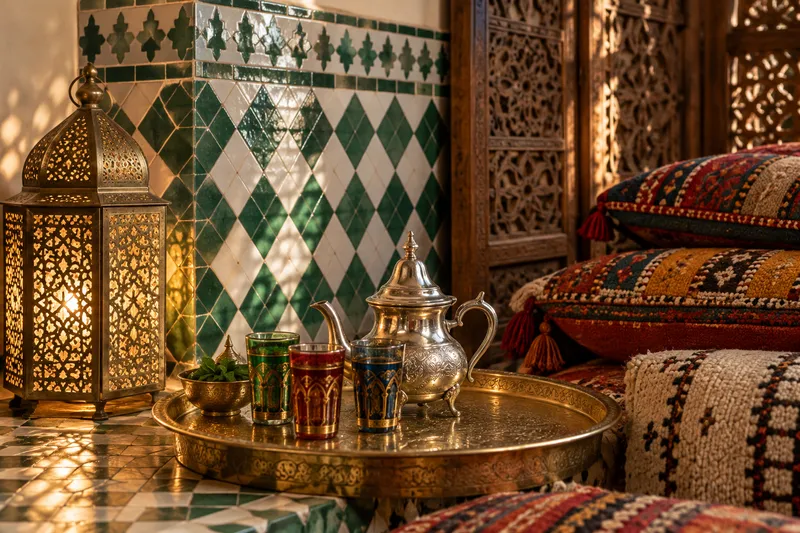
Small glazed clay tiles, cut by hand and set into geometric patterns. Each one is slightly uneven, so a zellige wall shimmers as the light moves. Today you will see plain zellige in one colour, green, white, terracotta or blue, used as a modern splashback or a bathroom wall.
2. Tadelakt and textured plaster
Tadelakt is a lime plaster polished with stones and sealed with olive-oil soap. It was made for hammams, and it gives walls a soft, seamless glow. Even a limewash paint can give a similar warm, cloudy texture.
3. Arches and carved wood
Horseshoe and pointed arches frame doors, windows and niches, and carved or painted cedar appears in doors, screens and ceilings. An arched mirror or an arched niche is the easiest way to bring this shape home.
4. Lantern light
Pierced brass, copper and iron lanterns throw patterns of light across walls and ceilings in the evening. A cluster of lanterns at different heights creates the classic Moroccan mood instantly.
5. Rugs, textiles and low seating
Beni Ourain rugs in cream wool with dark lines, colourful kilims and boucherouite rugs, poufs in leather, and long, low banquettes piled with cushions. Seating is made for long conversations and many cups of mint tea.
The Moroccan colour palette
Moroccan colours come from the land and the markets: terracotta, rose clay, saffron yellow, cinnamon and sand, with cool accents of Majorelle-style blue, deep green and teal. For a modern home, keep the walls in warm sand, cream or soft clay, and let tiles, rugs and cushions carry the stronger colours.
My tip: choose one Moroccan hero for the room, a rug, a tile wall or a lantern cluster, and keep everything else simple around it.
How to use Moroccan style in a modern home
- Start with warm walls: limewash or matte paint in sand, cream or clay.
- Choose a statement rug: a cream Beni Ourain for a calm look, or a kilim for colour.
- Add one zellige surface, such as a kitchen splashback, a shower wall or a coffee table top.
- Bring in the arch shape with a mirror, a niche shelf or an arched headboard.
- Layer warm light with two or three brass lanterns or pendants.
- Use low seating: a long sofa or built-in banquette with mixed patterned cushions, and a pouf or two.
- Finish with a brass tray table, a teapot and glasses, and an olive tree or palm in a terracotta pot.
In Dubai, Moroccan style works beautifully in a majlis or a terrace. Choose outdoor-friendly cushions, a woven rug and lanterns with candles or warm LEDs, and you have a space made for guests.
Mistakes to avoid
- Too many souvenirs. A room full of small objects looks like a shop; choose a few good pieces.
- Pattern on every surface. Balance busy tiles and rugs with plain walls and solid sofas.
- Harsh white lighting. Lanterns and warm bulbs are essential.
- Shiny imitation tiles. Real zellige or handmade-look tiles have a softness that flat printed tiles do not.
Moroccan vs Persian style
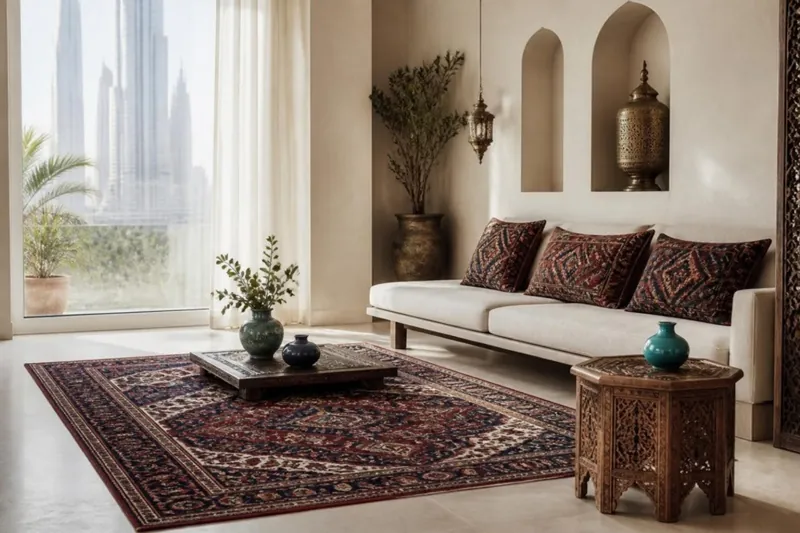
These two cousins share arches, courtyards and a love of pattern. Moroccan rooms lean on zellige, tadelakt, carved cedar and lanterns, with earthy spice colours. Persian rooms centre on hand-knotted rugs, mirror work and khatam, with deep blue, turquoise and red. If you love both, read my guide to Persian interior style and let one lead while the other is a guest.
A home made for guests
Moroccan style is generous and warm, like the hospitality behind it. Start with one lantern and one beautiful rug, invite friends for tea, and you will feel the difference. Moroccan style is one of the fifty styles in my book Soul of the Room. If you try it, share your room with me on Instagram.
Comments
No comments yet. Be the first to share your thoughts or ask Farnaz a question.