

Modern interior style is the look of clean lines, open space and honest materials. It came out of the design movements of the early twentieth century, roughly the 1920s to the 1950s, and it still shapes most of the homes we live in today: the open-plan living room, the big window, the sofa without frills, the kitchen without handles.
People often use "modern" to mean "new", but in design it means something more specific. A modern room follows one simple rule: form follows function. Every piece is there for a reason, decoration comes from materials and light rather than ornament, and the space itself is allowed to breathe. In this guide I will show you where the style comes from, its key elements, how it differs from contemporary design, and how I use it in Dubai homes.
Where modern style comes from
Modern design was a reaction against the heavy, decorated rooms of the nineteenth century. New materials such as steel, plate glass and reinforced concrete made new kinds of spaces possible, and designers wanted homes that were lighter, healthier and made for everyday life.
The Bauhaus school, founded in Germany in 1919 by Walter Gropius, was at the heart of it. Bauhaus teachers and students designed furniture, lamps, textiles and buildings with the same idea: simple, useful forms that could be made well and made for many people. Around the same time, Le Corbusier in France described the house as "a machine for living in" and built Villa Savoye (1931), with its open plan, long windows and white walls lifted on slim columns.
Ludwig Mies van der Rohe gave the style its most famous phrase, "less is more". His Barcelona Pavilion (1929) is still one of the best lessons in modern space: a few planes of marble, glass and water, and his Barcelona chair in steel and leather. Later, his Farnsworth House (1951) in Illinois turned the whole home into a glass box in nature. These buildings are worth looking at closely, because almost every idea in a modern interior is already there.
The key elements of a modern interior
1. Clean lines and simple shapes
Modern furniture is built from straight lines, flat planes and gentle geometry. Think of a low rectangular sofa, a slab coffee table, a dining table on simple legs and cabinets with flat fronts. There are no carved details, no turned legs and no fussy trims. The eye should move calmly around the room.
2. Open space and flow
Modern homes favour open plans where the living, dining and kitchen areas flow into each other. Walls are used only where they are needed, and furniture is placed with space around it. Empty space is not wasted space here; it is part of the design.
3. A neutral colour palette
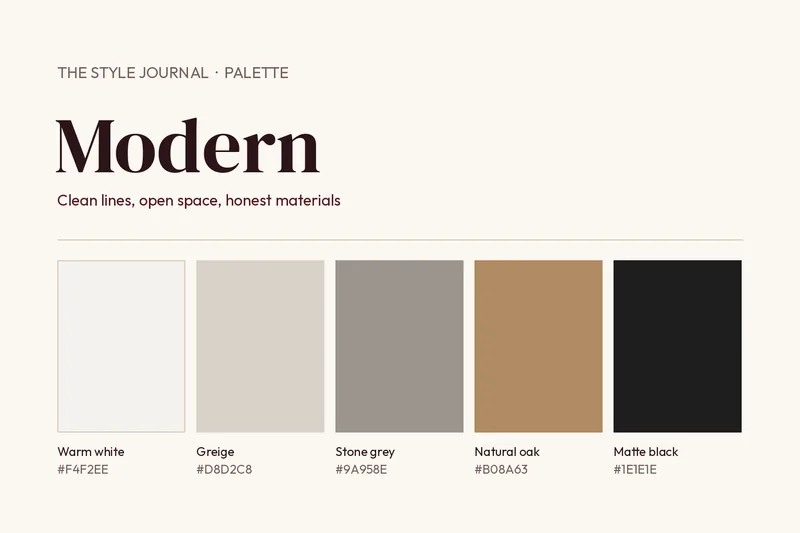
The base is white, warm white, greige, grey and black, with natural wood tones. Colour, when it comes, arrives in a single strong accent: a rust cushion, a deep blue chair, or one big piece of art. I like to keep a modern palette to five colours at most, as in the palette at the top of this post.
4. Honest materials
Modern design lets materials show what they are. Steel and chrome, glass, concrete, natural stone such as marble and travertine, leather, and smooth wood like oak and walnut. There is no fake wood grain and no painted marble. The beauty comes from the texture and quality of the real thing.
5. Light
Large windows, sheer or no curtains, and carefully placed lighting are essential. Modern rooms use light as decoration: a sculptural pendant over the dining table, a slim floor lamp beside the sofa, or hidden LED strips that wash a wall in soft light.
6. Few, carefully chosen accessories
A modern shelf does not hold thirty objects. It holds three: perhaps a ceramic vase, a stack of books and one sculpture. Each accessory should be good enough to stand on its own. The same goes for art: one large abstract canvas is more modern than a crowded gallery wall.
Modern furniture classics
Many of the pieces designed in this period are still made today, and one of them can anchor a whole room. The Barcelona chair by Mies van der Rohe, the Wassily chair by Marcel Breuer with its bent steel tubes, the LC2 armchair by Le Corbusier, Pierre Jeanneret and Charlotte Perriand, and Eileen Gray's E1027 side table are all modern icons. You do not need an original. A well-made piece in the same spirit, simple, honest and comfortable, does the same job.
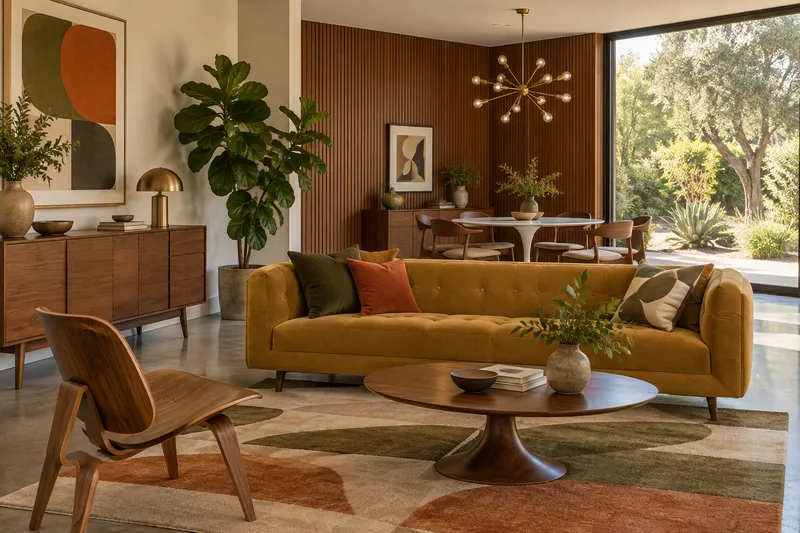
Mid-century designers carried these ideas into warmer, more organic forms, which I wrote about in my guide to mid-century modern style. If you love modern lines but want more wood and curves, that is the direction to look.
Modern vs contemporary: what is the difference?
This is the question I hear most. Modern design refers to a fixed period, roughly the 1920s to the 1950s, and its ideas: function, simplicity, honest materials. Contemporary design simply means the design of today, and it keeps changing. Right now contemporary interiors love curves, boucle fabrics, warm earthy colours and mixed textures.
The two often look alike because contemporary design borrows so much from modernism. A simple test: a modern room is crisp and architectural, with straight lines and a cooler, more disciplined palette. A contemporary room is softer and follows current trends. Many of the best homes today are a mix of both, with a modern structure and a few contemporary pieces for warmth.
Modern vs minimalist
Minimalism takes the modern idea of "less is more" to its limit: almost no objects, almost no colour, and storage that hides everything. A modern room is calm but still lived in, with books, art, a rug and a few personal things. If you want order without feeling like you live in a gallery, modern is the friendlier choice.
How I use modern style in Dubai homes
Modern style suits Dubai very well. Most new apartments and villas here already have the bones for it: open plans, big windows, tall ceilings and simple white walls. The work is usually about adding warmth so the space does not feel cold or like a showroom.
- Soften the light. Our sun is strong, so I use sheer linen curtains or light-filtering blinds in white or greige. They keep the clean look and stop glare on glossy floors.
- Warm the floor. Large porcelain or marble tiles are common in Dubai and can feel hard. A big wool or wool-and-viscose rug in a quiet tone grounds the living area and helps the acoustics.
- Choose stone with care. Travertine, warm limestone and honed marble feel more natural in our light than very glossy, very white surfaces, and they hide dust better.
- Add one natural element. An olive tree, a fiddle-leaf fig or a simple arrangement of dry branches brings life to the straight lines.
- Plan the lighting in layers. Ceiling spotlights alone flatten a modern room. Add a pendant over the dining table and at least two lamps in the living area for the evenings.
For families, I often recommend performance fabrics on the sofa and a dining table in solid wood or sintered stone. Modern style should look calm, but it also has to survive real life.
Common mistakes to avoid
- Making everything grey. A room of grey walls, grey sofa and grey rug feels flat. Mix warm white, wood and one accent.
- Forgetting texture. Without texture a modern room feels cold. Add linen, wool, leather, wood grain and stone.
- Buying a whole furniture set. Matching sofa, chairs and tables from one range look like a showroom. Mix pieces with the same spirit instead.
- Too many small accessories. Edit hard and choose a few larger pieces.
- Ignoring storage. Open space only stays calm if things have a place to go. Built-in, flat-fronted storage is the modern answer.
How to start
If you want to try modern style without redoing everything, start with three steps. First, clear surfaces and keep only the objects you love. Second, choose one modern anchor piece, such as a clean-lined sofa, a slab coffee table or a sculptural pendant. Third, bring the palette together: repaint in warm white, and repeat black and wood tones in two or three places around the room.
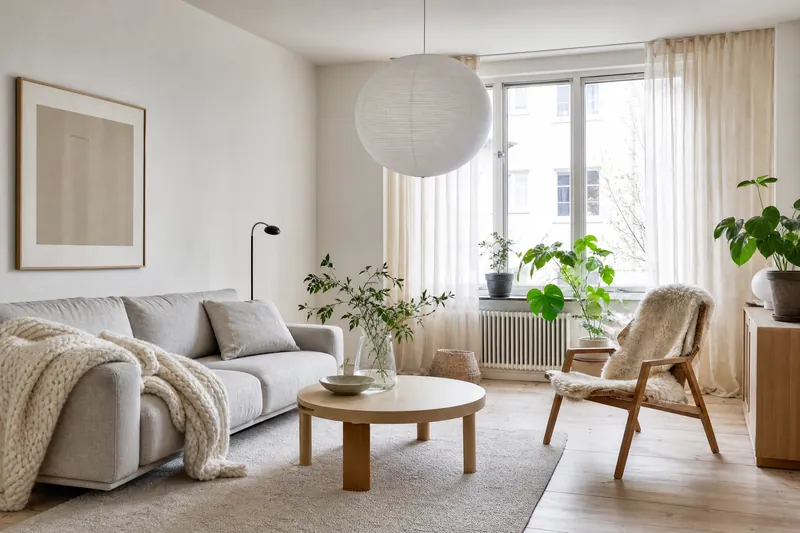
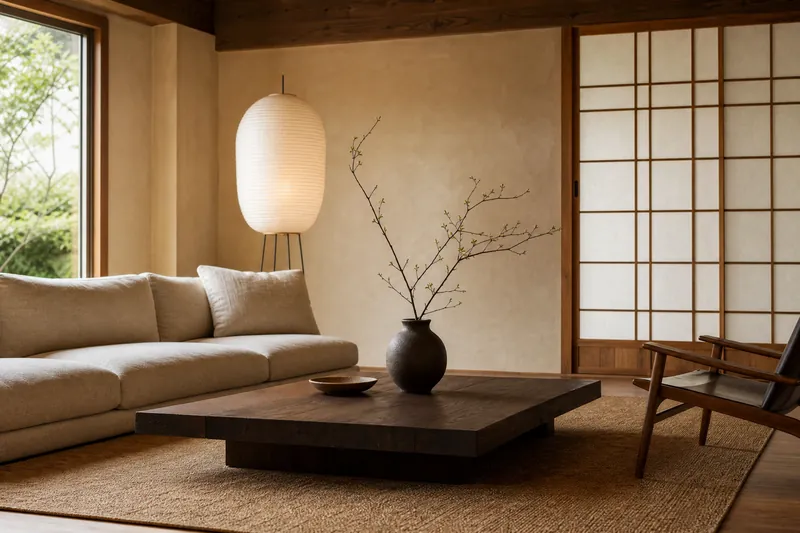
Modern style is also a great base for other looks. Add rattan and linen and it moves toward coastal; add low furniture and dark wood and it moves toward Japandi; add soft white, pale oak and wool and you are close to Scandinavian. That flexibility is one reason it has lasted for a hundred years.
If you would like help planning a modern home that still feels warm and personal, you can book a consultation with me. I am happy to look at your space and suggest where to start.
Comments
No comments yet. Be the first to share your thoughts or ask Farnaz a question.