

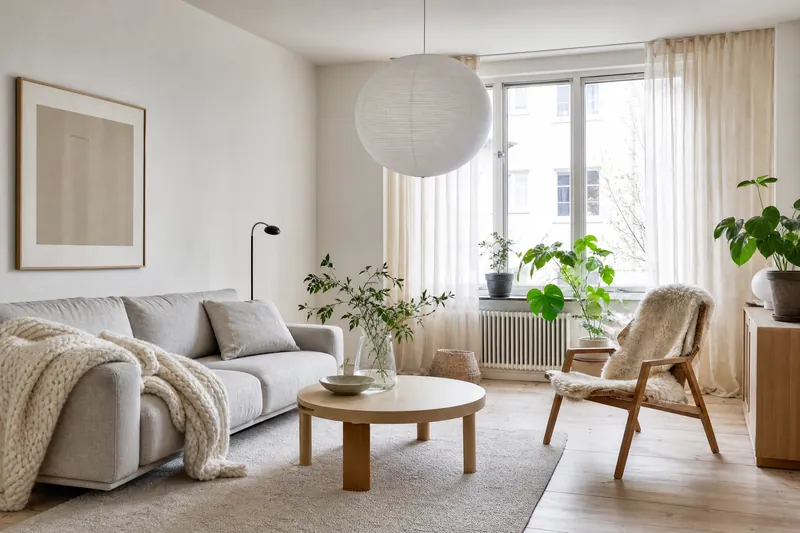
Scandinavian interior style is about light, warmth and simplicity. It comes from the Nordic countries, where winters are long and dark, so every home is designed to catch as much daylight as possible and to feel cosy when the sun goes down. White walls, pale wood, soft textiles and a few beautiful, useful things: that is the whole recipe.
I love this style because it proves my favourite rule: a beautiful home is not about a bigger budget. A Scandinavian room looks expensive because it is calm, not because it is full. In this guide I will show you where the style comes from, the five elements that define it, and how to bring it into a modern apartment, even a sunny one in Dubai.
Where Scandinavian style comes from
Scandinavian design grew in the early twentieth century across Denmark, Sweden, Norway, Finland and Iceland, and reached its golden age in the 1950s. Designers such as Alvar Aalto, Arne Jacobsen, Hans J. Wegner and Poul Henningsen believed good design should be simple, functional and affordable for ordinary families, not only the rich. In 1954 the exhibition Design in Scandinavia at the Brooklyn Museum made "Scandinavian Modern" furniture fashionable in America, and the look has never really left.
Behind the style there is also a feeling: the Danish idea of hygge, a warm, relaxed cosiness with candles, blankets and people you love. That is why a Scandinavian room is minimal but never cold.
The five elements that define it
1. Light, and lots of it
Walls are white or soft off-white, windows are left as open as possible, and curtains are light linen or sheer cotton. Mirrors and pale floors bounce daylight around. In the evening, light comes from several warm lamps at different heights, never one harsh ceiling light.
2. Pale natural wood
Oak, ash, birch and pine appear in floors, tables, chairs and shelves, usually with a matte, natural finish. Wood is what makes a white room feel warm instead of clinical.
3. Soft natural textiles
Wool throws, linen cushions, a sheepskin on a chair, a flat-weave or wool rug. Textiles add the cosiness and the texture that keep a simple room interesting.
4. Simple, honest furniture
Clean lines, gentle curves, legs you can see under the sofa and the table. Each piece is useful and well made. Many classics, like Wegner's Wishbone chair or Aalto's bent-wood stools, are still made today, but simple copies in good wood work beautifully too.
5. Greenery and a few meaningful objects
A fiddle-leaf fig, eucalyptus in a vase, a handmade ceramic bowl, a stack of books, a framed print. Decoration is chosen, not collected. Empty space is part of the design.
The Scandinavian colour palette
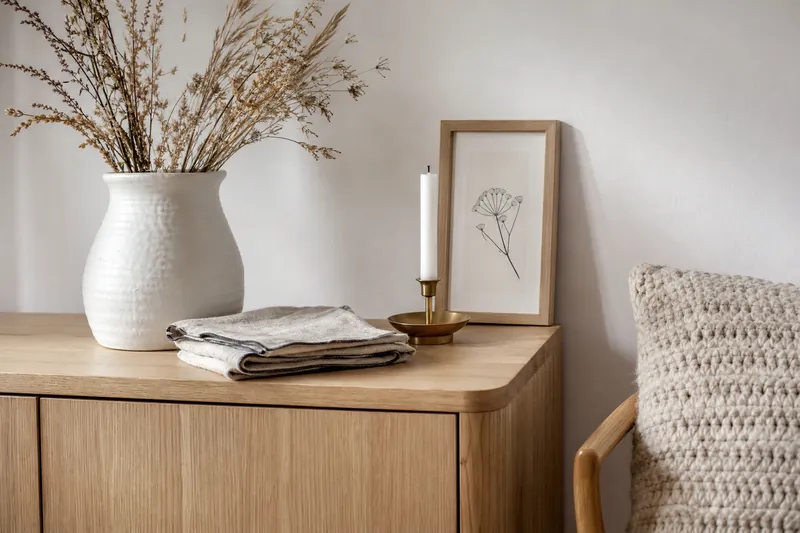
Think of a winter morning: white, chalk, warm grey, oat and sand, with pale wood in between. Accents are soft and natural, such as sage green, dusty blue, muted terracotta or mustard. A little black, in a lamp, a picture frame or a chair, gives the room definition. If you want more colour, put it in cushions, a rug or art, so you can change it easily.
My tip: if your room feels cold, don't add more colour first. Add wood and wool. Warmth in Scandinavian style comes from texture.
How to use Scandinavian style in a modern home
Here is the order I use when I help people create this look:
- Clear first. Remove anything you don't use or love; the style needs breathing space.
- Paint or keep the walls a warm white, not a blue-white. Warm whites look softer in strong sun.
- Choose one light wood tone and repeat it: the coffee table, a shelf, picture frames.
- Pick a low sofa in light grey, oat or cream linen, and add two or three cushions in wool or linen.
- Layer lighting: a paper or white pendant, a floor lamp by the sofa, a small lamp on a shelf, warm bulbs everywhere.
- Add one big plant and one or two smaller ones.
- Finish with a few personal objects: ceramics, books, one or two framed prints at eye level.
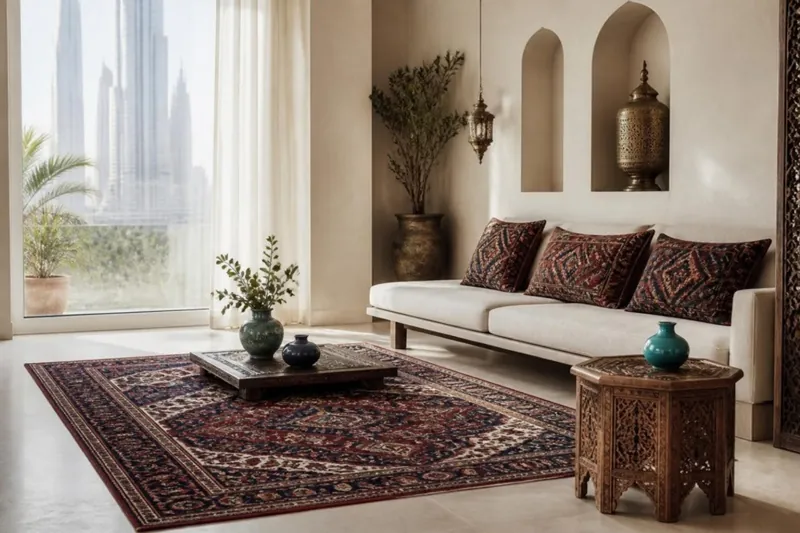
In a Dubai apartment, swap heavy wool for linen and cotton, use a light jute or cotton rug, and choose sheer curtains so the room glows instead of glaring. Keep the floor pale if you can; if you have dark tiles, a large light rug will do the same job.
Mistakes to avoid
- Making everything white. Without wood and texture the room looks like a clinic.
- Too many small decorations. Scandinavian rooms have fewer, larger, better pieces.
- Cold lighting. One bright ceiling light kills the cosy feeling; use warm lamps.
- Flat-pack everything. Mix in at least one piece with real character: a vintage chair, a handmade lamp, a wooden bench.
Scandinavian vs Japandi
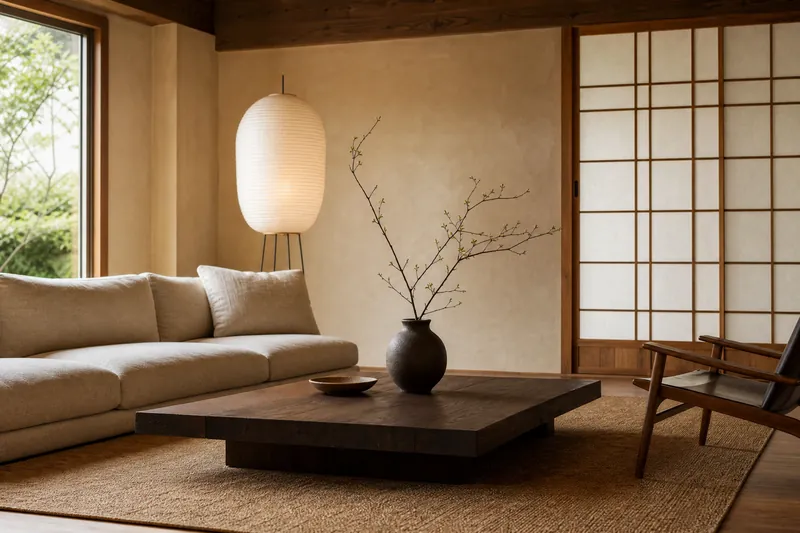
Japandi mixes Scandinavian comfort with Japanese calm. Scandinavian rooms are lighter and cosier, with more white, soft textiles and pale wood. Japandi rooms are lower and more grounded, with darker wood, earthy neutrals and fewer objects. If you love both, start with a Scandinavian base and add one or two darker wood pieces and a handmade ceramic. You can read more in my guide to Japandi interior style.
A calm home, one room at a time
Scandinavian style is easy to start: clear a surface, warm up the light, add one wooden piece and one soft throw, and see how the room changes. In my book Soul of the Room I explain fifty interior styles like this one, and how to mix them in a real family home. And if you try this look, show me on Instagram. I love seeing your rooms.
Comments
No comments yet. Be the first to share your thoughts or ask Farnaz a question.