

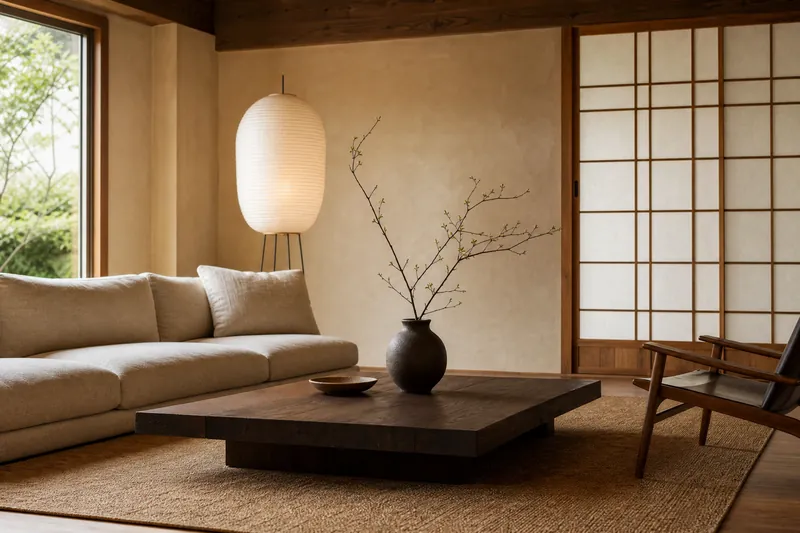
Japandi interior style is a calm blend of Japanese and Scandinavian design. From Japan it takes low furniture, natural materials, darker wood and the beauty of handmade, imperfect things. From Scandinavia it takes comfort, light wood and soft textiles. Together they create rooms that feel peaceful and warm at the same time.
Many of my followers ask me how to make a small apartment feel bigger and quieter. Japandi is often my answer. It is not about buying new things; it is about choosing fewer, better ones. Here is where the style comes from, what defines it, and how to create it at home.
Where Japandi comes from
The word Japandi, a mix of "Japan" and "Scandi", became popular around 2016, but the friendship between the two design cultures is much older. Danish and Finnish designers of the mid-twentieth century admired Japanese craft and simplicity, and both cultures share a respect for natural materials, careful making and a home that is connected to nature.
Two ideas sit behind the style. From Japan comes wabi-sabi, finding beauty in simple, natural and slightly imperfect things, like a hand-thrown bowl or weathered wood. From Denmark comes hygge, the warm feeling of comfort and togetherness. Japandi is where the two meet.
The five elements that define it
1. Low, grounded furniture
Sofas, beds and tables sit lower than usual, which makes ceilings feel higher and rooms more restful. Shapes are simple, with gentle curves and visible legs or solid wooden bases.
2. Warm wood, light and dark together
Japandi often mixes pale oak or ash with darker walnut, smoked oak or black-stained wood. That contrast is what makes it different from pure Scandinavian style.
3. Earthy neutral colours
Walls in warm off-white, clay or soft beige, sometimes with a limewash or plaster texture. Accents in charcoal, black, olive or sage. Nothing bright or shiny.
4. Natural, handmade textures
Linen, cotton, jute, paper, bamboo, rattan, stone and handmade ceramics. A paper lantern, a woven basket and a stoneware vase can do more than any expensive decoration.
5. Space and quiet
Storage is hidden, surfaces are mostly clear, and each object has room around it. One branch in a vase, one piece of art, one beautiful bowl. Emptiness is not missing decoration; it is part of the design.
The Japandi colour palette
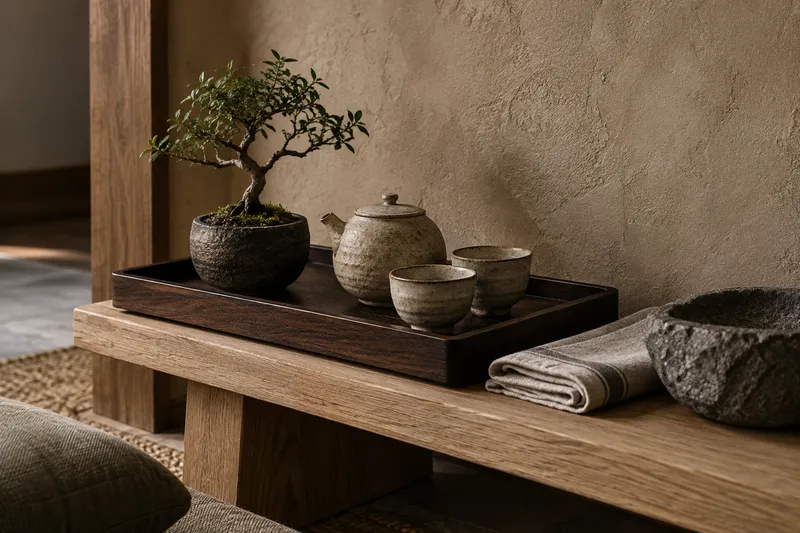
Build the room on warm neutrals: rice white, sand, oat, clay and warm grey. Add depth with charcoal, dark walnut and black, and bring life with muted greens from plants or a sage cushion. Avoid cool, blue-whites and very bright colours; Japandi light should feel like late afternoon.
My tip: before you buy anything for a Japandi room, take three things out. The style starts with what you remove.
How to use Japandi style in a modern home
- Edit the room first: hide cables, remotes and everyday clutter in closed storage.
- Choose a low sofa or bed in linen or cotton in oat, sand or warm grey.
- Add one darker wood piece, such as a walnut coffee table or a black-framed bench, to ground the light tones.
- Use paper or fabric lamps for soft, indirect light; avoid bright spotlights.
- Pick one natural rug in jute, wool or cotton.
- Display only a few handmade objects: a ceramic vase, a tea set, a stone bowl.
- Bring in nature with branches, a bonsai or one large leafy plant.
In Dubai apartments with glossy white floor tiles, a large textured rug and a few wooden pieces will soften the shine. Sheer linen curtains turn strong sunlight into the gentle, diffused light that Japandi loves.
Mistakes to avoid
- Going too empty. Without texture and warmth, Japandi becomes cold minimalism.
- Mixing too many wood tones. Choose two, one light and one dark, and repeat them.
- Fake materials everywhere. A little real wood, linen or ceramic matters more than many plastic look-alikes.
- Bright, cool lighting. Use warm bulbs and lamps at low heights.
Japandi vs Scandinavian
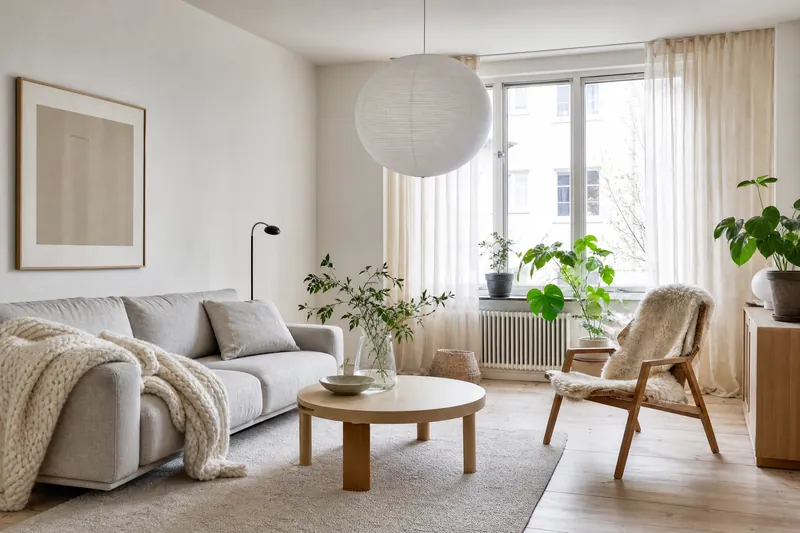
Scandinavian rooms are brighter, whiter and cosier, with more soft textiles. Japandi rooms are lower, earthier and more restrained, with darker wood accents and fewer objects. Both love natural materials and simplicity, so they mix easily. If you want the lighter version, read my guide to Scandinavian interior style.
A quieter home
Japandi is a style you feel more than see: a room where your eyes can rest. Start with one corner, clear it, add one natural texture and one handmade object, and enjoy the calm. Japandi is one of the fifty styles in my book Soul of the Room, where I show how to bring each style into a real home.
Comments
No comments yet. Be the first to share your thoughts or ask Farnaz a question.